卯兔
Morning light. A wish for harmony.
From the first light of dawn to the Jade Rabbit in the moon, discover the stories, folk art and gentle vitality of the fourth zodiac animal.
Explore the story ↗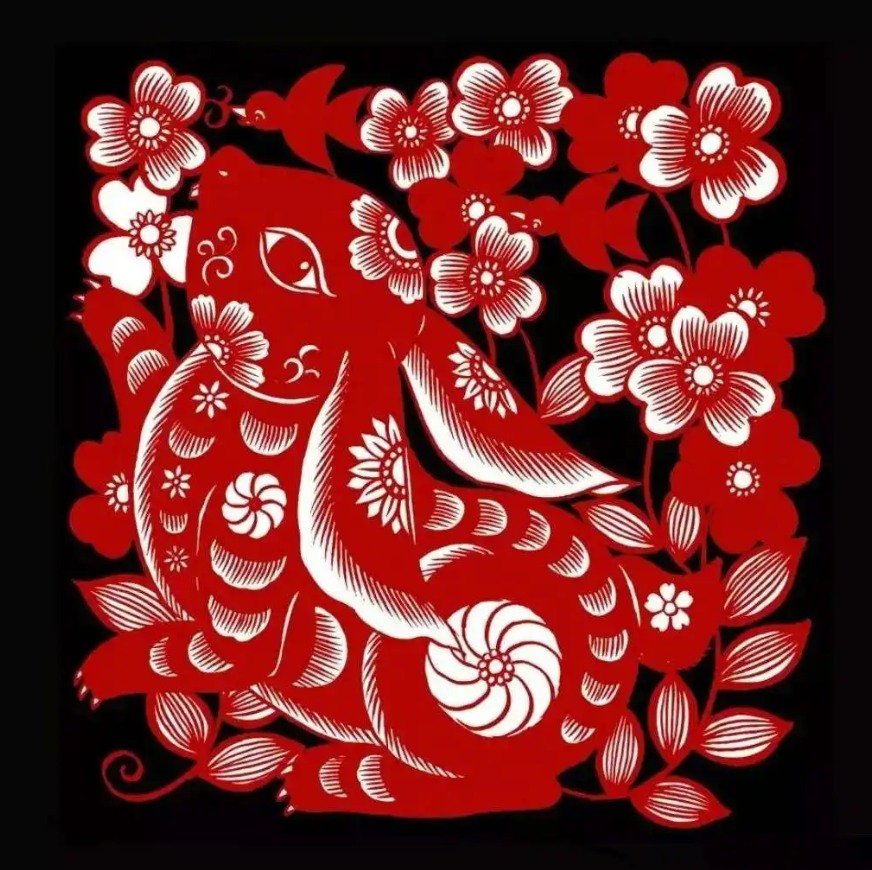
How the Rabbit joined the zodiac
Long ago, the Rabbit and the Ox were neighbors. The Ox worked steadily without complaint, while the Rabbit boasted about its speed and mocked its slow-moving neighbor: ‘What use are those four legs? At that pace, when will you ever finish a circuit?’ The Ox took no offense and simply continued working. When the Jade Emperor announced that the first animals to reach heaven would join the zodiac, the Rabbit felt certain of victory. It took its time, setting out only when the sun was already high. Halfway there, it grew sleepy. ‘I am so fast that even a nap will not hurt,’ it thought, and fell asleep by the roadside. By the time it woke, the sun was sinking. The Rabbit raced toward heaven, only to find that the Rat, the Ox and the Tiger had arrived ahead of it. It had to settle for fourth place. Accepting the lesson, it bowed deeply to the Ox: ‘Brother Ox, I was wrong. Steady progress matters more than speed. Instead of looking down on others, I should learn to respect myself.’ From then on, the Rabbit stopped mocking others and became one of the zodiac’s most humble animals.
Another version tells of a great flood. To guide villagers trapped in a cave, the Rabbit leapt into the river and became a living marker. By following the direction in which it floated, the villagers found a way to safety. Hearing of its courage, the Jade Emperor made a special exception and granted it a place in the zodiac.
Why is the Rabbit paired with Mǎo?
1. The first light of morning
卯时 (mǎo shí) is the traditional two-hour period from 5 a.m. to 7 a.m., when day breaks and dew still lies on the ground. The source’s traditional explanation associates this time with rabbits emerging to feed at dawn and retreating during the day to avoid predators. This perceived daily rhythm links the Rabbit with the mǎo hour.
The mǎo month is the second lunar month, in the middle of spring, when plants put out shoots and life begins to flourish. The rabbit’s prolific breeding makes it a symbol of continuing vitality, echoing the season’s associations with growth and renewal.
2. The character and its associations
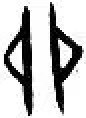
The early Chinese dictionary Shuowen Jiezi connects 卯 (mǎo) with 冒 (mào), ‘to emerge,’ describing the second month as a time when things rise out of the earth. The source interprets the oracle-bone character as two door panels opening outward, leaving a gap through which light enters. Opening a door thus becomes an image of beginnings and growth. The mǎo hour, when the heavens seem to open and the world awakens, is paired with the rabbit emerging to feed in the morning light.
In the traditional Five Phases system, mǎo is classified as yin wood: tender spring growth, gentle and reserved in character. The rabbit’s mild temperament and alertness, without the ferocity of a large predator, are seen as matching this image of vitality expressed through gentleness.
3. Yin and yang in sequence
The twelve Earthly Branches alternate between 阴阳 (yīn yáng), the complementary principles of yin and yang. Zǐ, yín, chén, wǔ, shēn and xū are yang branches; chǒu, mǎo, sì, wèi, yǒu and hài are yin branches.
The preceding Tiger is fierce and forceful, qualities classified as yang. The Rabbit, with its gentle disposition and soft form, is classified as yin. This succession of yang and yin follows the alternating pattern used to relate the zodiac animals to the Earthly Branches.
What the Rabbit symbolizes
1. The auspicious rabbit in the moon
Rabbit imagery is closely tied to the moon. The source describes the 玉兔 (yù tù), ‘Jade Rabbit,’ pounding medicine in the lunar palace as an established cultural image from the Warring States through the Han period. In Tianwen (Questions to Heaven), Qu Yuan asks how the moon renews itself after fading and why it holds a rabbit within it. Ancient stories place the Jade Rabbit in the moon’s palace. Both the moon and mǎo are associated with yin, giving the zodiac Rabbit an aura of luminous, otherworldly good fortune. The medicine-pounding legend links it with longevity, peace and relief from illness. In Mid-Autumn traditions, it is an important auspicious animal expressing reunion, harmony and well-being.
2. Good fortune and prosperity
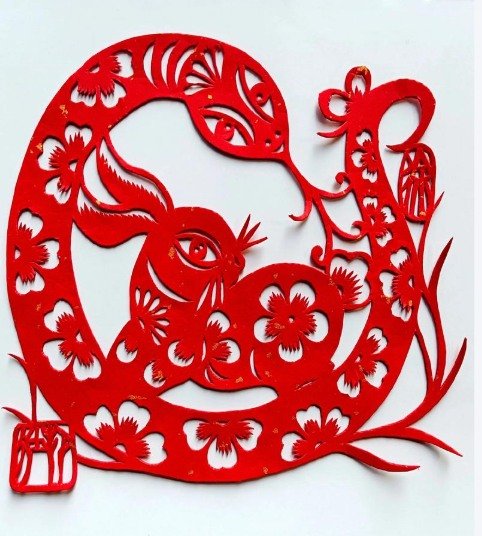
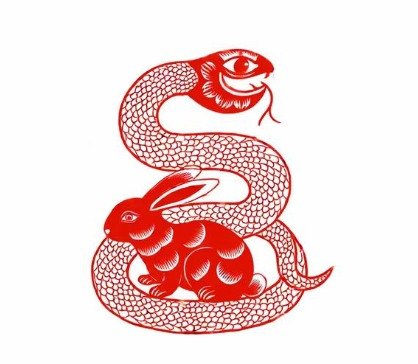
Rabbits have traditionally been regarded as auspicious creatures. Red and white rabbits were interpreted as signs of a ruler’s flourishing virtue. The source cites Ruiying Tu (Illustrations of Auspicious Responses), which describes the red rabbit as appearing when a ruler possesses great virtue. White rabbits were especially prized and seen as omens of peace. Another folk saying declares, ‘A snake coils around a rabbit, and wealth is sure to follow.’ The snake is understood as a little dragon and the rabbit as a spirit of the moon; their entwined forms become a symbol of good fortune.
3. Alertness and quiet intelligence
Gentle, watchful and quick on its feet, the rabbit represents intelligence and careful judgment without aggression. These qualities echo the reserved softness of mǎo’s yin wood. Folk imagery often uses the rabbit to suggest a kind person who acts resourcefully and knows when to advance or retreat. Its gentleness complements the bold, commanding character associated with the Tiger.
4. Wishes for descendants
The Rabbit combines associations with longevity and a flourishing family. In societies with limited productive resources, vigorous reproduction could inspire reverence. Rabbits can produce several litters in a year, making them a folk symbol of continuing life and hopes for many descendants. The source cites the ancient dictionary Erya’s wording ‘tù zǐ yuē miǎn’ in connection with rabbit offspring. The practical desire for a family line to continue helped make the rabbit an image of fertility.
Folk customs and beliefs
1. Moon worship and Lord Rabbit
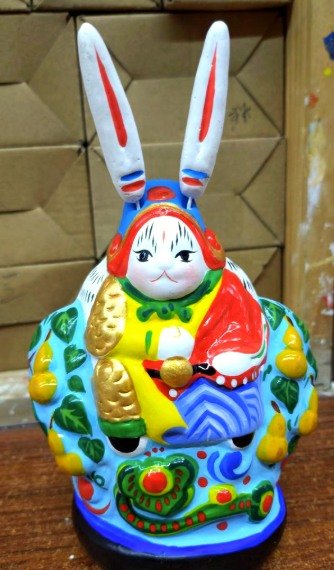
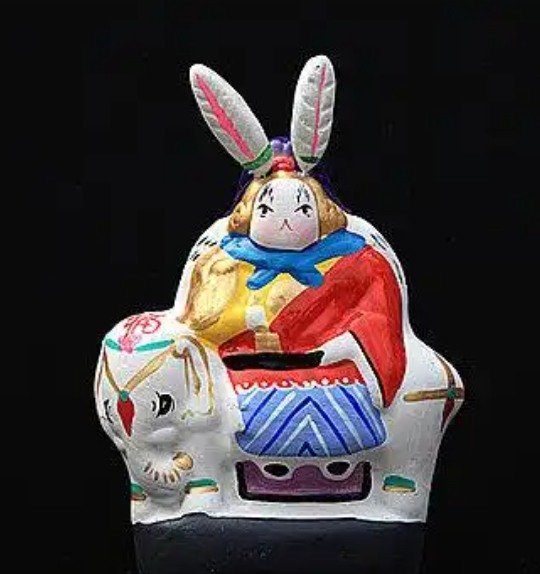
The legend of the Jade Rabbit pounding medicine has inspired a distinctive Mid-Autumn figure: 兔儿爷 (Tùr Yé), often translated as ‘Lord Rabbit.’ The Qing-era Yanjing Suishiji (Seasonal Customs of the Capital) describes skilled makers shaping yellow clay into lunar toad-and-rabbit figures for sale at the festival, known as Tùr Yé. Traditionally, families displayed and worshipped Lord Rabbit to wish for peace at home and freedom from disaster and illness. Children also played with these clay figures, a characteristic northern Chinese Mid-Autumn custom associated with good fortune and health.
2. Ornaments, embroidery and New Year pictures
Jade pendants, silver jewelry, embroidery and New Year prints often feature the Jade Rabbit. Rabbit designs on children’s accessories express hopes that they will grow up safe, bright and quick-witted. On wedding objects, the same imagery conveys wishes for descendants and a harmonious family.
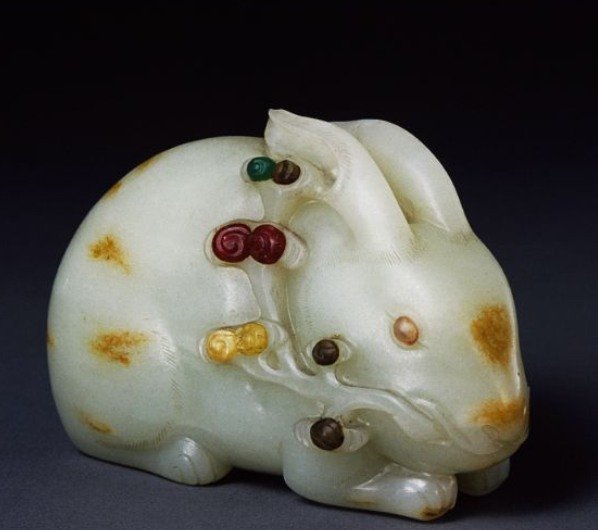
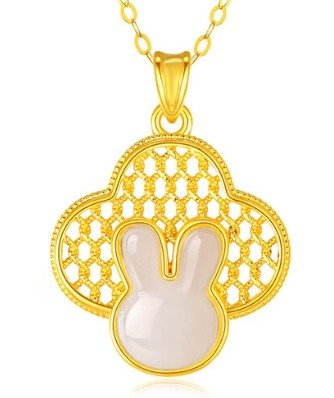
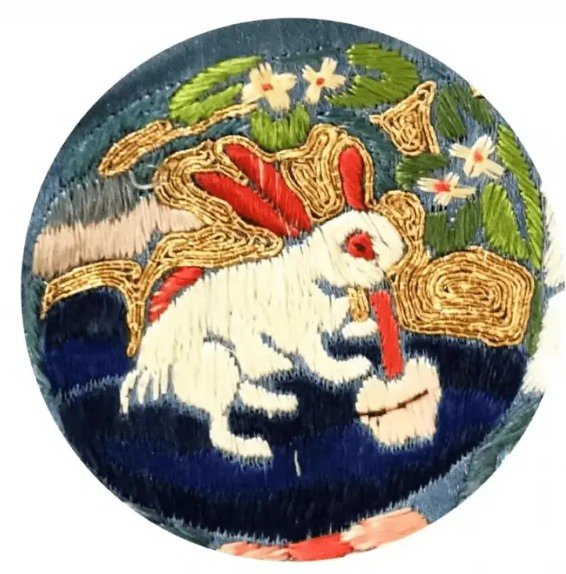
A familiar paper-cut motif is 蛇盘兔 (shé pán tù), ‘a snake coiling around a rabbit.’ The rabbit sits at the center, enclosed by the snake’s body. This widely circulated auspicious design illustrates the folk saying about the pair bringing prosperity.
Idioms, proverbs and everyday wisdom
Each entry presents the original Chinese, its pronunciation in pinyin, an English rendering and an explanation of its meaning. These expressions explore quick thinking, preparedness, luck and the limits of gentleness.
狡兔三窟
A clever rabbit has three burrows
To keep several places of refuge or alternative plans, so that danger can be avoided in more than one way.
守株待兔
Waiting by a stump for another rabbit
To rely on luck and hope for rewards without effort. The image is of someone waiting for another rabbit to run into the same tree stump.
兔死狐悲
The fox mourns when the rabbit dies
To feel sorrow at the misfortune of someone whose situation is like one’s own.
兔死狗烹
Once the rabbits are dead, the hunting dog is cooked
People who helped achieve a goal are discarded or killed when they are no longer useful.
动如脱兔
Moving like a rabbit breaking free
To act with remarkable speed and agility.
兔子不吃窝边草
A rabbit does not eat the grass beside its own burrow
A figurative rule against harming people close to home or committing wrongdoing in one’s own surroundings.
狡兔有三穴,人生有三备
A clever rabbit has three holes; a person should have three preparations
Keep several options ready rather than risking everything on a single plan.
兔子急了也咬人
Even a rabbit bites when driven too far
A gentle, honest person may fight back when pushed to the limit.