寅虎
Forest majesty. A guardian spirit.
From the first light of dawn to embroidered shoes and paper-cut art, discover the legends, protective symbols and enduring spirit of the third zodiac animal.
Explore the story ↗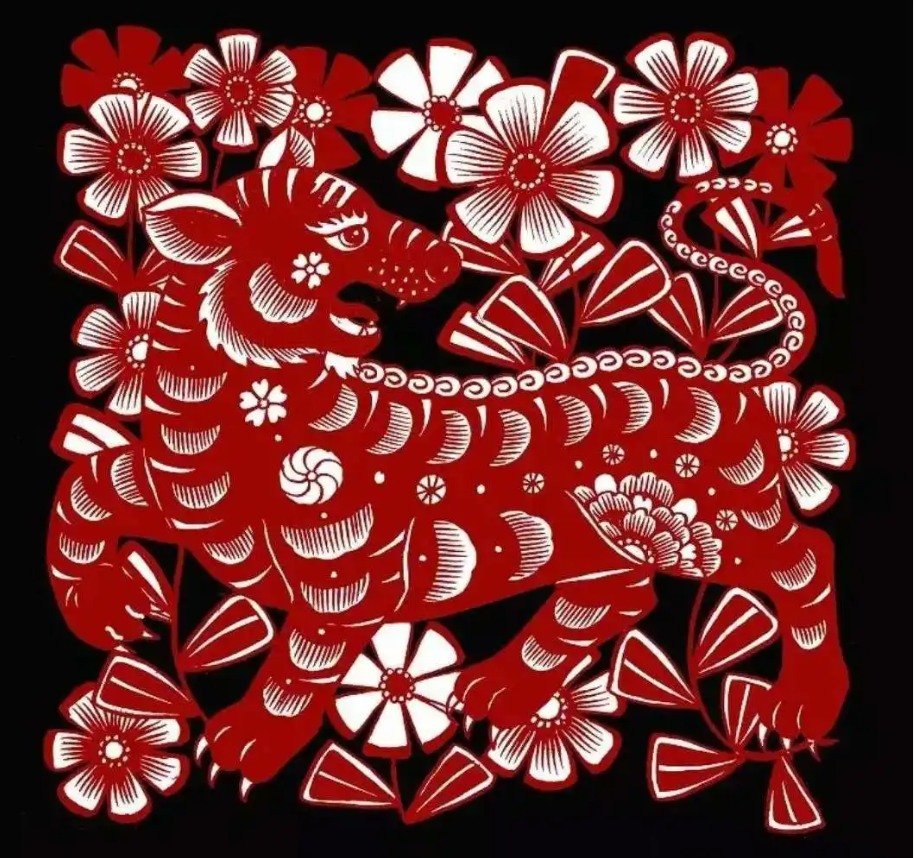
The legend of the king of beasts
A folk tale explains the markings on a tiger’s forehead as a badge of honor bestowed by the Jade Emperor. When the zodiac animals were first being chosen, the Lion was a candidate. But its violent nature and poor reputation led the emperor to consider replacing it with the Tiger, a guard at his court. With disorder threatening the animals below, he sent the Tiger to earth to bring them under control. The Tiger asked that each successful mission be recorded as a separate achievement. It subdued the Lion, the Bear and the Horse, and the delighted emperor marked its forehead with three horizontal strokes. Later, a turtle monster in the Eastern Sea stirred up storms and trouble. The Tiger defeated it too. To honor this fourth victory, the emperor added a vertical stroke through the three horizontal lines, forming 王 (wáng), the Chinese character for ‘king.’ In the story, these markings are earned through service to the people, and the Tiger becomes the recognized king of beasts.
Why is the Tiger paired with Yín?
1. The approach of dawn
寅时 (yín shí) is the traditional two-hour period from 3 a.m. to 5 a.m., when dawn approaches but darkness has not yet lifted. In the source’s traditional account, tigers patrol, hunt and roar through the forests at this time, while other large predators are described as most active earlier in the night. This perceived rhythm is offered as a reason for pairing the Tiger with the yín hour.
Yín also corresponds to the first month of the traditional Xia calendar. The early Chinese dictionary Shuowen Jiezi describes this month as a time when yang energy stirs underground and seeks to rise, even while yin remains strong. Winter has not fully loosened its hold, but new life is gathering strength. The source evokes an early-spring tiger emerging from seclusion and patrolling its territory as an image of this seasonal awakening.
2. The character and its associations
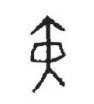
The source presents an interpretation of the oracle-bone form of 寅 (yín) that connects it with an arrow and an arrow case. Taking an arrow from its case suggests readiness to advance or strike. In this reading, the character carries associations with focused energy, martial resolve and imposing authority.
In 五行 (wǔ xíng), the Five Phases of traditional Chinese cosmology, yín is classified as yang wood, a place where wood energy begins to grow. It is also said to contain bǐng fire, or yang fire: fire held within wood. This combination evokes vigorous growth and martial force. The tiger’s commanding presence as ruler of the forest is seen as matching these energetic and formidable associations.
3. A shared yang character
The twelve Earthly Branches are divided between 阴阳 (yīn yáng), the complementary principles of yin and yang. Odd-numbered branches are classified as yang, and yín is one of them. In the corresponding traditional classification of zodiac animals, the Tiger is also a yang animal. Matching yang branches with yang animals, and yin branches with yin animals, provides another symbolic explanation for the pairing.
4. Direction, landscape and cosmology
In the traditional system of directions, yín corresponds to the northeast. The east is associated with wood and the growth of forests. The tiger, also known as 山君 (shān jūn), ‘lord of the mountains,’ inhabits wooded mountain landscapes. The source connects yín’s emerging wood energy with flourishing vegetation and forests, bringing the northeast position, the tiger’s habitat and its cultural image together in one symbolic association.
What the Tiger symbolizes
1. Protection against evil
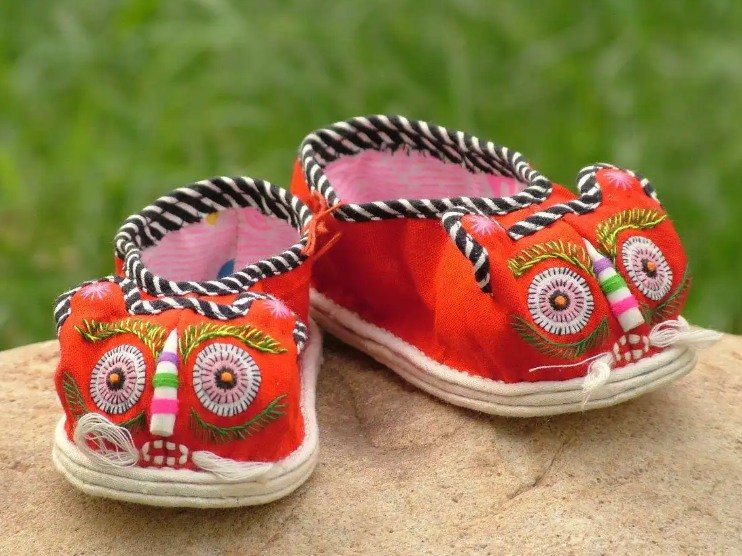
Within traditional belief, yín’s yang character is thought to counter harmful yin forces. The Tiger consequently became a prominent protective animal in the zodiac. Folk accounts tell of tigers devouring ghosts and frightening away spirits of the mountains. Such beliefs gave the tiger a role in guarding homes, averting misfortune and protecting people and livestock. Tiger-head shoes, 艾虎 (ài hǔ), tiger-shaped mugwort decorations, and tiger paper-cuts all draw on this protective symbolism.
2. Majesty, courage and authority
Known as both the ‘lord of the mountains’ and the ‘king of beasts,’ the tiger embodies leadership, determination and extraordinary courage. The growth and decisive force associated with yín wood are seen as echoing its character. Tiger imagery has long been applied to warriors and military authority: ‘tiger generals,’ 虎贲 (hǔ bēn), elite warriors or guards, tiger banners and 虎符 (hǔ fú), tiger-shaped military tallies used to authenticate authority, all express strength and command.
3. Renewal and a fresh beginning
The traditional Xia calendar used the 建寅 (jiàn yín) system, placing the yín month—the first lunar month—at the beginning of the year. Through this link with the opening of a new annual cycle, Yín Hǔ carries hopes for leaving the old behind, welcoming fresh vitality and beginning anew.
Folk customs and beliefs
1. Tiger clothing for children
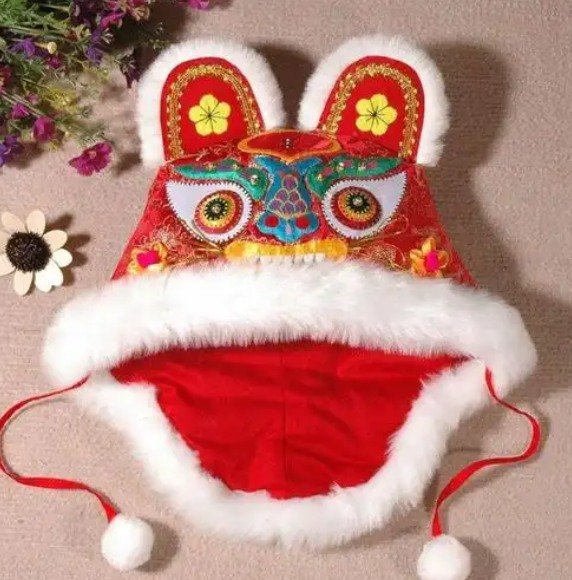
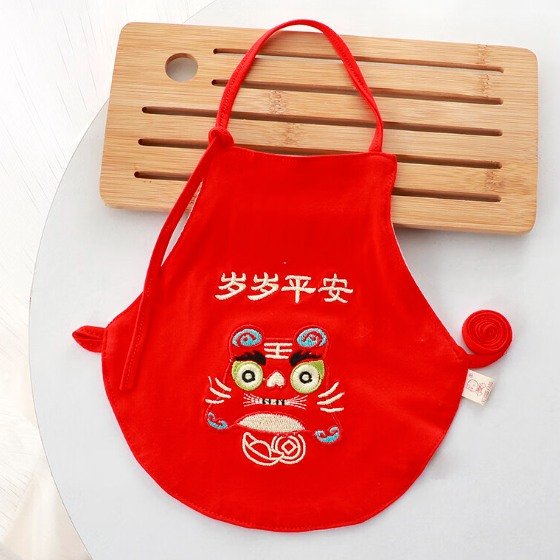
Families have traditionally sewn tiger-head shoes, hats and 肚兜 (dù dōu), cloth garments covering a child’s chest and belly. In folk belief, children were thought to be spiritually vulnerable to harmful forces. Dressing them in tiger imagery expressed wishes for protection, good health, physical strength and courage.
2. Tiger pictures as household guardians
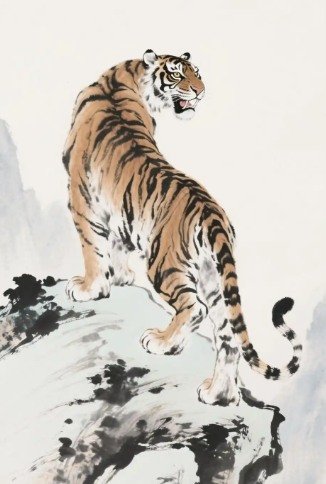
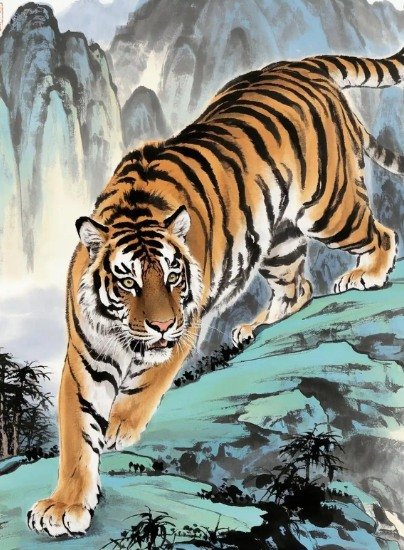
The tiger has long been imagined as a guardian of doorways, inspiring customs of pasting tiger images on doors and hanging tiger paintings indoors. Some traditions hold that a protective tiger picture should face outward toward a door or window to repel harmful influences. They also distinguish between an ascending tiger, regarded as more suitable for a home, and a fierce descending tiger, more often associated with shops or workplaces.
3. Tiger ornaments and toys
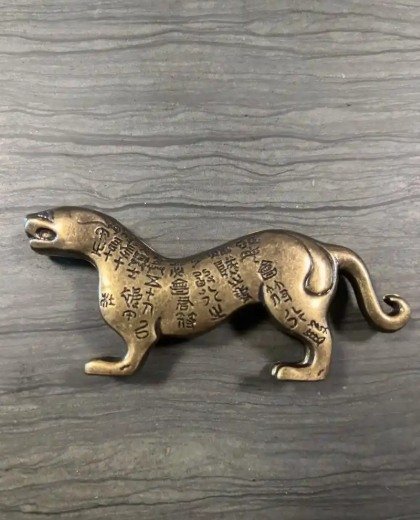
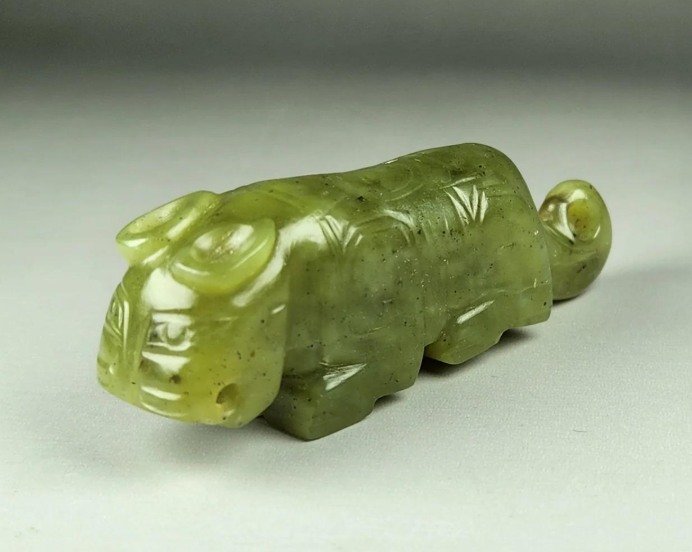
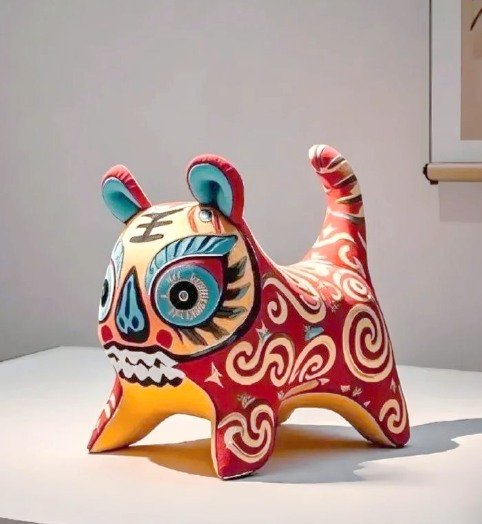
Tiger tallies, jade tigers and 布老虎 (bù lǎo hǔ), cloth tiger toys, are familiar objects in Chinese material culture. Cloth tigers are especially associated with northern folk traditions; their rounded, gentle forms carry wishes for children’s protection. Some folk beliefs encourage people born in a Tiger year to wear jade tiger ornaments, favoring calm expressions over fierce or threatening designs.
4. Traditional taboos
Some customs discourage positioning a fierce tiger ornament so that it continually faces a person.
Others discourage placing fierce tiger ornaments on a dining table.
Fierce descending-tiger paintings and ornaments are traditionally considered unsuitable for bedrooms.
Tiger images are also discouraged from facing a bed directly.
Placing two imposing tiger figures opposite each other is sometimes avoided. The image of ‘two tigers fighting’ is believed to invite quarrels and disputes.
Out of respect for the tiger’s symbolic power, some customs discourage stepping on or sitting on textiles decorated with tiger heads.
Idioms, proverbs and everyday wisdom
Each entry presents the original Chinese, its pronunciation in pinyin, an English rendering and an explanation of its meaning. These expressions draw on the tiger’s power, courage and danger in traditional culture.
虎虎生威
Radiating a tiger’s power
To appear vigorous, imposing and full of vitality.
如虎添翼
Like a tiger given wings
An already powerful person or force becomes even stronger with new support.
龙腾虎跃
Dragons soaring and tigers leaping
A scene of thriving activity, energy and exuberance.
降龙伏虎
Subduing dragons and taming tigers
To overcome formidable opponents or challenges.
龙潭虎穴
A dragon’s pool and a tiger’s den
An extremely dangerous place.
虎踞龙盘
A crouching tiger and a coiling dragon
A commanding, naturally defensible landscape, often describing a city or fortress.
狼吞虎咽
Gulping like a wolf, swallowing like a tiger
To devour food quickly and greedily.
虎视眈眈
Watching with a tiger’s hungry gaze
To watch with hostile intent, waiting for a chance to seize something.
与虎谋皮
Asking a tiger for its own skin
Trying to persuade a hostile person to sacrifice their own interests: an impossible bargain.
养虎为患
Raising a tiger that becomes a danger
To tolerate or nurture a harmful person, creating future trouble for oneself.
为虎作伥
Serving as a tiger’s ghostly accomplice
To help a wrongdoer harm others. A 伥 (chāng) is a ghost in folklore that assists the tiger that killed it.
如狼似虎
Like wolves and tigers
Fierce, cruel or savage.
虎落平阳
A tiger brought down to the plains
A powerful person loses their advantage and suffers humiliation from lesser figures. The full saying adds ‘is bullied by dogs.’
谈虎色变
Turning pale at the mention of a tiger
To react with fear at the mere mention of something frightening.
生龙活虎
A lively dragon and a spirited tiger
Full of energy and life.
虎头蛇尾
A tiger’s head and a snake’s tail
An impressive beginning followed by a weak or careless ending.
虎头虎脑
Tiger-headed and tiger-minded
An affectionate description of a sturdy, innocent-looking child.
狐假虎威
The fox borrows the tiger’s might
To bully others by relying on someone else’s power or authority.
骑虎难下
Riding a tiger and unable to get off
To be trapped midway through a course of action, unable to continue or withdraw easily.
调虎离山
Luring the tiger away from its mountain
To draw an opponent away from a stronghold so that an opportunity can be exploited.
放虎归山
Releasing the tiger back into the mountains
To let a powerful enemy go free and leave oneself open to future harm.
虎毒不食子
Even a fierce tiger does not eat its cubs
A traditional saying expressing the belief that even a cruel person will spare their own children; it is figurative, not a rule of animal behavior.
苛政猛于虎
Oppressive government is fiercer than a tiger
Cruel rule can be more terrifying than a dangerous beast.
不入虎穴,焉得虎子
Without entering the tiger’s den, how can you get its cubs?
A valuable achievement may require confronting risk and difficulty.
一山不容二虎
One mountain cannot hold two tigers
Two powerful rivals may struggle to coexist in the same territory or sphere of influence.
龙困浅滩遭虾戏,虎落平阳被犬欺
A dragon stranded in the shallows is mocked by shrimp; a tiger on the plains is bullied by dogs
When the powerful lose their favorable circumstances, even the weak may dare to mistreat them.
山中无老虎,猴子称大王
When there is no tiger in the mountain, the monkey calls itself king
When a strong leader is absent, someone of lesser ability may seize power and show off.
明知山有虎,偏向虎山行
Knowing there is a tiger in the mountain, yet heading straight toward it
To face danger and difficulty deliberately and courageously.
老虎屁股摸不得
A tiger’s backside must not be touched
A metaphor for someone so touchy, proud or quick-tempered that even a small provocation can cause trouble.
初生牛犊不怕虎
A newborn calf does not fear a tiger
Young and inexperienced people may fearlessly challenge powerful opponents or unfamiliar difficulties.
画虎不成反类犬
Trying to paint a tiger, but producing something like a dog
An attempt to imitate something impressive fails through lack of skill and becomes an awkward substitute.
虎生三子,必有一彪
Of a tiger’s three cubs, one will be a biāo
A traditional saying that one person in a generation or group will stand out for exceptional fierceness, ability or individuality. 彪 (biāo) here names an unusually fierce tiger-like offspring in folk imagery.
老虎也有打盹的时候
Even a tiger has moments when it dozes
Even the strongest or most vigilant person can have a moment of carelessness or lowered defenses.