未羊
Gentle strength. A wish for harmony.
From a heavenly gift of grain to three goats welcoming spring, discover the kindness, nourishment and auspicious meanings of the eighth zodiac animal.
Explore the story ↗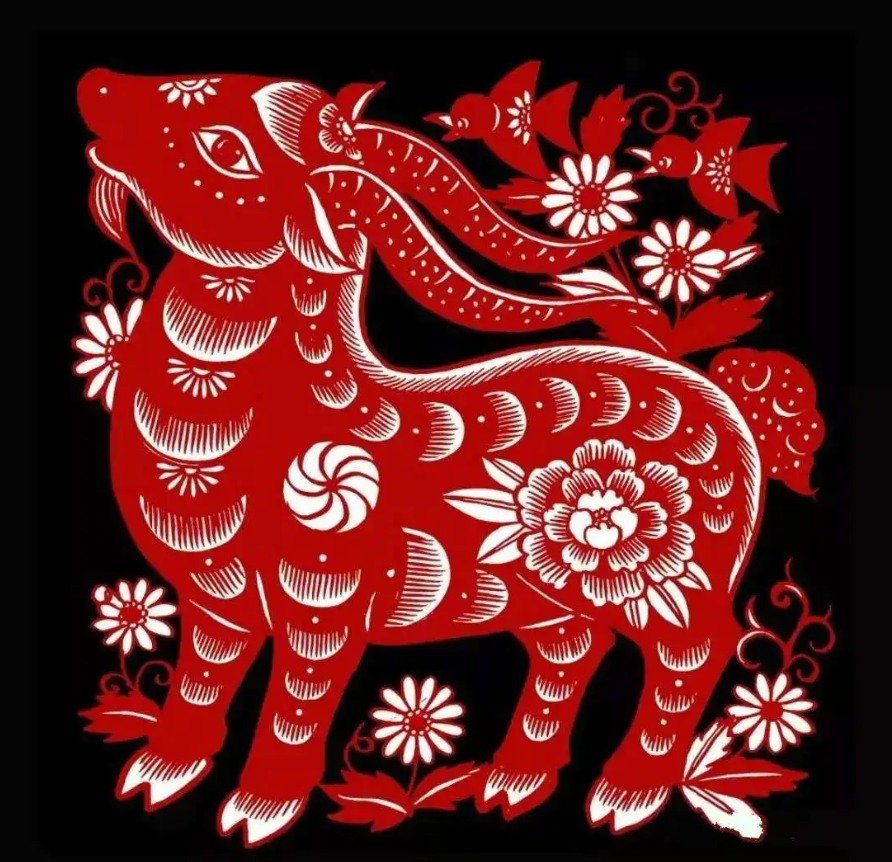
How the Goat joined the zodiac
A folk story presents the Goat as a creature of selfless courage. Long ago, it guarded the grain stores of heaven. One year, a terrible drought left people on earth without a harvest, surviving on tree bark and roots. Moved by their suffering, the Goat secretly carried heavenly grain seeds down to earth and taught people to sow them. By autumn, the fields yielded a rich harvest. The people rejoiced, but the Jade Emperor was furious: the Goat had stolen the seeds and broken heavenly law. He ordered it into exile on earth. The Goat answered that it would gladly accept punishment if it could save humankind. Before descending, it offered its flesh to feed people and its fleece to keep them warm. Deeply touched, the emperor made it a zodiac guardian and gave it eighth place, so that future generations would remember its kindness.
Why is the Goat paired with Wèi?
The source explains the pairing through several overlapping traditional systems, rather than a single determining factor.
1. Afternoon and the close of summer
未时 (wèi shí) is the traditional two-hour period from 1 p.m. to 3 p.m. The source imagines the afternoon sun moving westward, heat easing and pasture remaining full of moisture. Its traditional account describes sheep and goats grazing while other livestock rest, taking stems and leaves without disturbing roots so that grass can grow again. It links this image of grazing and renewed growth with the wèi hour. This is the cultural explanation recorded in the article, rather than a universal description of livestock behavior.
Wèi also corresponds to the sixth month of the traditional Xia calendar, the final month of summer. Vegetation is imagined at its fullest, offering abundant pasture for flocks to grow and thrive. This seasonal association connects the animal with the month’s symbolism.
The source also relates the branches to the sun’s cycle. Wǔ, the preceding branch, represents peak yang and is associated with the summer solstice. Wèi follows as yang begins to yield to yin and vigorous growth gives way to nurturing and gathering. The Goat’s gentle, peaceful image complements the Horse’s spirited energy, echoing this transition between the two branches.
2. Written characters and their meanings
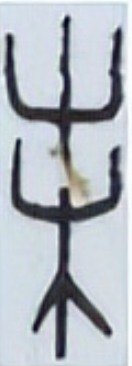
The source describes the oracle-bone form of 未 (wèi) as a tree with abundant branches and leaves. The early dictionary Shuowen Jiezi links it with 味 (wèi), ‘flavor,’ the sixth month and luxuriant foliage. The article interprets it as flourishing vegetation and fruit approaching, but not yet reaching, ripeness.
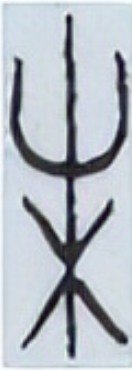
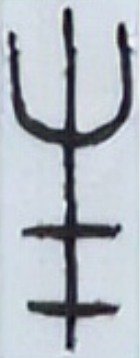
In early writing, 羊 (yáng) could stand for 祥 (xiáng), ‘auspicious.’ Shuowen Jiezi explicitly associates the two, and the older expression 吉羊 (jí yáng) corresponds to the later 吉祥 (jí xiáng), ‘good fortune.’ Wèi suggests approaching maturity and an imminent harvest, while yáng suggests gentleness and nourishment. The source also points to the sheep-or-goat component in characters such as beauty, goodness and righteousness, linking these meanings with wèi’s nurturing qualities.
The source makes an important distinction: these interpretations of characters and meanings are later theoretical explanations, developed after Han-era classical scholarship matured. They are not direct evidence of how the original zodiac pairing began.
3. The Five Phases and nurturing earth
Within 五行 (wǔ xíng), the Five Phases of traditional Chinese cosmology, wèi is classified as dry yin earth and a storehouse of wood. Its hidden stems are jǐ earth, dīng fire and yǐ wood, combining lingering warmth with the remaining energy of vegetation.
Earth is associated with support and nourishment. Sheep and goats feed on vegetation and depend on the land to thrive, supplying agricultural households with milk, meat, hides and fleece. In this symbolic reading, they express the earth’s capacity to sustain life and bear its many needs.
The yǐ wood held within wèi preserves a trace of plant energy. The source links this with the animal’s plant-based diet, creating a symbolic cycle: earth supports plants, and plants feed the flock.
4. Yin and the even-numbered hoof
Wèi is eighth in the Earthly Branch sequence and is therefore classified as yin. In a traditional scheme that assigns yin and yang through odd and even numbers of toes or hoof divisions, sheep and goats have cloven hooves, each split in two. An even-numbered branch and an animal classified as yin are thus brought together.
The wèi hour follows the wǔ hour. Wǔ represents full yang, while wèi suggests the emergence of yin and a shift from activity toward quiet. The active Horse is associated with yang, and the peaceful Goat with yin. Their consecutive places illustrate the flow of 阴阳 (yīn yáng), the complementary principles of yin and yang, from midday into afternoon.
What the Goat symbolizes
Rooted in agricultural life, Wèi Yáng brings together the auspicious associations of yáng and the nurturing earth symbolism of wèi. It expresses good fortune, respect for parents, gentleness and humility, alongside the growth of life and the alternation of yin and yang. Where the Dragon evokes heavenly majesty and the Horse determined progress, the Goat conveys human warmth, compassionate care and hopes for a peaceful world.
1. Beauty, goodness and moral ideals
Shuowen Jiezi’s association of yáng with xiáng connects the animal with goodness, purity and beauty. In early bronze inscriptions, ‘jí yáng’ carries the sense later written as ‘jí xiáng,’ or good fortune. The source presents the animal as an early auspicious emblem and an important image behind positive values in Chinese writing.
羊 (yáng) is a component of 美 (měi), ‘beauty’; 善 (shàn), ‘goodness’; 祥 (xiáng), ‘auspiciousness’; 義/义 (yì), ‘righteousness’; and 養/养 (yǎng), ‘to nourish.’ The source connects this esteem with the animal’s gentle image and its practical gifts: meat for food, fleece for warmth and milk for nourishment. Usefulness and moral imagination come together in a creature associated with beauty, justice, care and kindness.
2. Good fortune and the return of spring
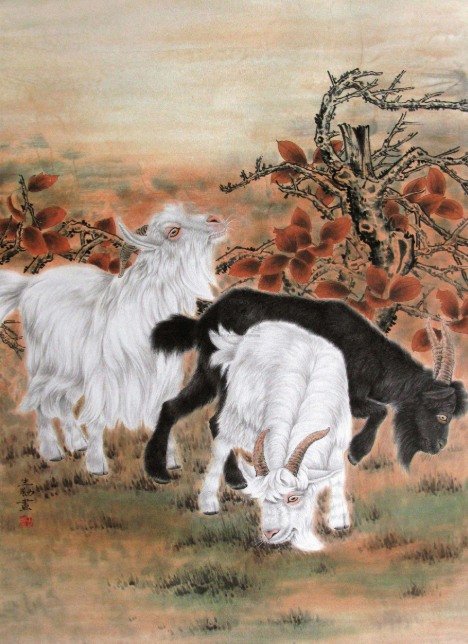
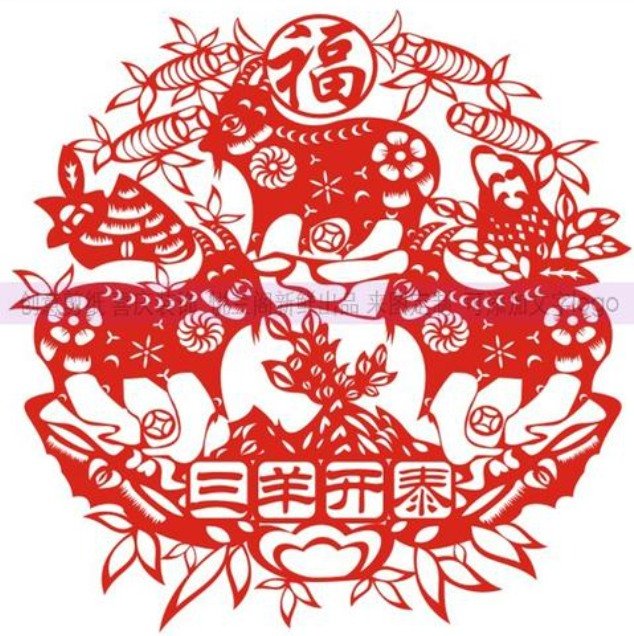
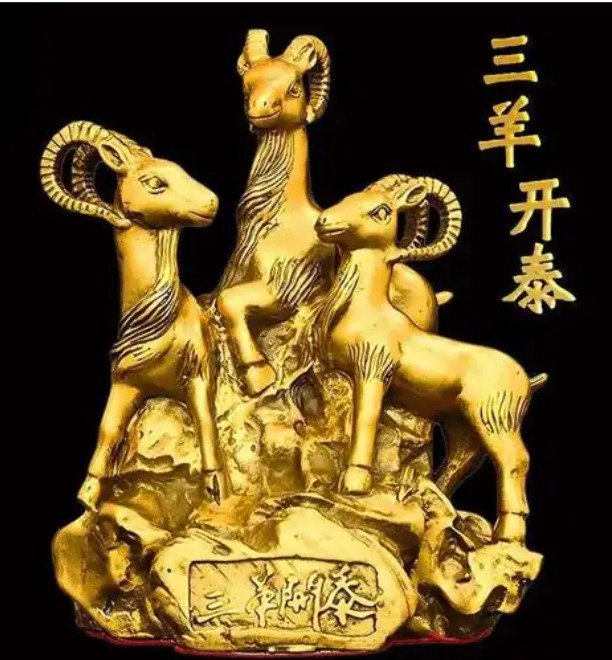
三阳开泰 (sān yáng kāi tài) is a major auspicious expression associated with the Tài hexagram in the Book of Changes, whose lower three lines are yang. It evokes winter giving way to spring, yin receding, yang rising and hardship turning toward better times. Because 羊 (yáng), ‘sheep or goat,’ sounds like 阳 (yáng), the yang principle, folk art expresses the idea through 三羊开泰, three animals heralding renewal and prosperity.
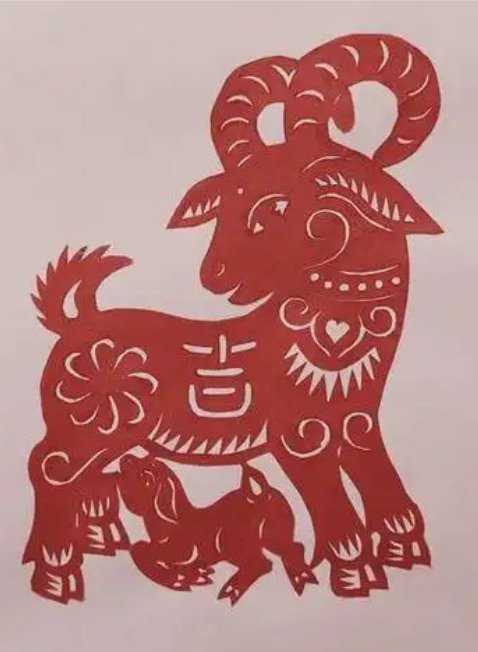
New Year prints, paper-cut window decorations, ornaments and other designs often show three sheep or goats beside sunshine and spring grass. These images echo seasonal change and returning life while expressing wishes for a fresh start, a peaceful household, flourishing fortunes and harmony in the world.
3. Gentleness, gratitude and care for parents
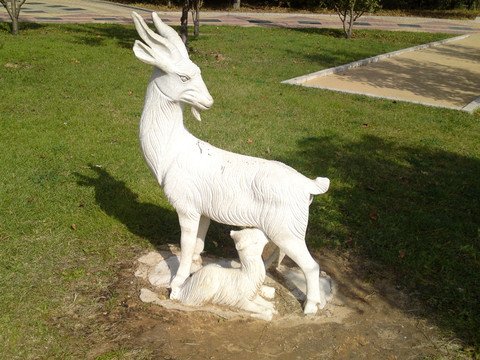
One of the best-known images is 羔羊跪乳 (gāo yáng guì rǔ), ‘a lamb kneeling to nurse.’ The source cites traditional moral writings and customs, including Zengguang Xianwen and folk interpretations of filial teachings, that read this posture as a sign of gratitude toward parents. The animal becomes a symbol of recognizing kindness and repaying care.
The Goat’s traditional image is mild, accommodating and uncontentious. Unlike the ferocity of tigers or the commanding majesty of dragons, its appeal lies in quietness and peace. The source connects these qualities with Confucian ideals of gentle conduct and moral self-cultivation, making the Goat a model for honoring parents and practicing kindness.
4. Continuing life and a flourishing household
The source describes sheep and goats as valuable household assets in agricultural society: productive animals associated with reproduction, manageable upkeep and the growth of family resources. Over time, they came to express wishes for enough food and clothing, a prosperous home, continuing descendants and security across generations.
This meaning also fits the source’s interpretation of wèi as yin earth and a storehouse of wood. Plants depend on the land, flocks depend on plants, and people receive nourishment from the animals. The resulting image—earth grows plants, plants sustain the flock, and the flock supports people—expresses continuing care and renewal within traditional cosmology.
Folk customs and beliefs
1. Seasonal foods. Eating sheep or goat meat in autumn and winter is a longstanding food custom. Traditional dietary thought classifies it as warming and nourishing, associating it with protection from cold and support for yang. These are traditional wellness ideas, rather than individual medical advice. At Lunar New Year, dumplings made with this meat also draw on the old connection between yáng and auspiciousness, expressing wishes for health and good fortune at home.
2. Ritual offerings. Sheep or goats held an important place in early Chinese sacrificial rites. 太牢 (tài láo) offerings combined cattle, sheep or goats, and pigs; 少牢 (shào láo) used sheep or goats and pigs. These were significant ceremonial categories associated with rulers and high-ranking officials. Their offerings expressed wishes for favorable weather, plentiful harvests, a peaceful country and safety through the year, drawing on an image of the animal as gentle and pure.
3. Respect within ritual tradition. The Book of Rites states that a high official should not kill a sheep or goat without a proper occasion. The source reads this as restraint outside major ritual or ceremonial needs. Ritual texts also call the animal 柔毛 (róu máo), ‘soft fleece,’ emphasizing purity and gentleness. It thus appears as a respected offering through which people expressed devotion and addressed the divine.
Idioms, proverbs and everyday wisdom
Expressions about sheep and goats have two contrasting tendencies. Associations with good fortune and a kneeling lamb’s gratitude evoke kindness and respect for parents. Their mild, vulnerable image also gives rise to expressions about weakness, timidity or taking blame for others: entering a tiger’s mouth, wearing a tiger’s skin while remaining a sheep underneath, or becoming a scapegoat. Other sayings draw on everyday herding experience and the spread of zodiac symbolism into folk life.
Each entry presents the original Chinese, its pronunciation in pinyin, an English rendering and an explanation of its meaning. These expressions explore good fortune, gratitude, vulnerability and practical wisdom.
三阳开泰(三羊开泰)
Three yang lines usher in renewal; three goats herald good fortune
Drawing on the Tài hexagram in the Book of Changes, this expression celebrates returning spring and better times. The word yáng creates a pun between the yang principle and sheep or goats.
吉羊如意
May auspicious blessings fulfill your wishes
An older wordplay using 羊 (yáng) for 祥 (xiáng), ‘auspicious,’ corresponding to the familiar wish 吉祥如意 (jí xiáng rú yì).
羊有跪乳之恩
The lamb kneels in gratitude for its milk
A traditional image reminding children to honor and care for their parents.
亡羊补牢
Mend the pen after losing a sheep
Even after something goes wrong, timely action can prevent further losses.
顺手牵羊
Lead away a sheep as the chance arises
To take someone else’s property or seek improper gain by exploiting an opportunity. It is also the name of one of the Thirty-Six Stratagems.
羊入虎口
A sheep enters a tiger’s mouth
A vulnerable person falls into the power of a dangerous opponent and finds escape difficult.
莫做替罪羊
Do not become a scapegoat
Do not let an innocent person bear another’s blame. The source connects the scapegoat image with ancient sacrificial customs.
挂羊头卖狗肉
Display a sheep’s head, but sell dog meat
To use a reputable name or attractive appearance to conceal inferior goods or a different reality.
羊毛出在羊身上
The wool comes from the sheep itself
An apparent benefit is ultimately paid for by the very person receiving it.
老虎再凶不食子,绵羊再柔不欺邻
However fierce the tiger, it does not eat its cubs; however gentle the sheep, it does not bully its neighbors
A figurative moral saying emphasizing that gentle people do not seek to harm others; it is not a rule of animal behavior.