辰龙
Rising clouds. An enduring spirit.
From ancient jade and shell forms to rain-filled skies and festival dances, discover the origins, symbols and enduring imagination of the fifth zodiac animal.
Explore the story ↗
Where the dragon comes from
The source presents a totem-based account of the dragon’s origins. Thousands of years ago, before a unified state existed, communities across the land honored different animals as sacred emblems of identity: fish among waterside groups, deer on grasslands, snakes in forested mountains and eagles on highlands. Such images appeared on banners and objects, expressing shared beliefs and a sense of belonging.
Through migration, conflict, alliances and marriage, these communities gradually formed larger groups. Different sacred emblems could create competing loyalties. In this account, a new image emerged by bringing together features of the animals honored by different communities, rather than placing one emblem above all the others. Each group could recognize something of itself in the resulting creature: the dragon.
The Southern Song scholar Luo Yuan’s Erya Yi describes a dragon with deer-like horns, a camel-like head, rabbit-like eyes, a snake-like neck, a shèn-like belly, fish-like scales, eagle-like claws, tiger-like paws and ox-like ears. 蜃 (shèn) is a clam-associated creature of traditional lore. This composite appearance presents the dragon as a cultural creation. Within the source’s interpretation, features associated with different places and communities become a single, integrated image.
The expression ‘descendants of the dragon’ is a cultural metaphor, rather than a claim of biological descent from a mythical creature. The source reads it as a symbol of a community formed through the meeting of many peoples, family lines and beliefs. From the legendary era of the Flame and Yellow Emperors through the Qin, Han, Tang and Song dynasties to the present, it traces Chinese civilization as a long process of exchange, absorption and integration. Dragon imagery gives this shared identity a lasting visual form.
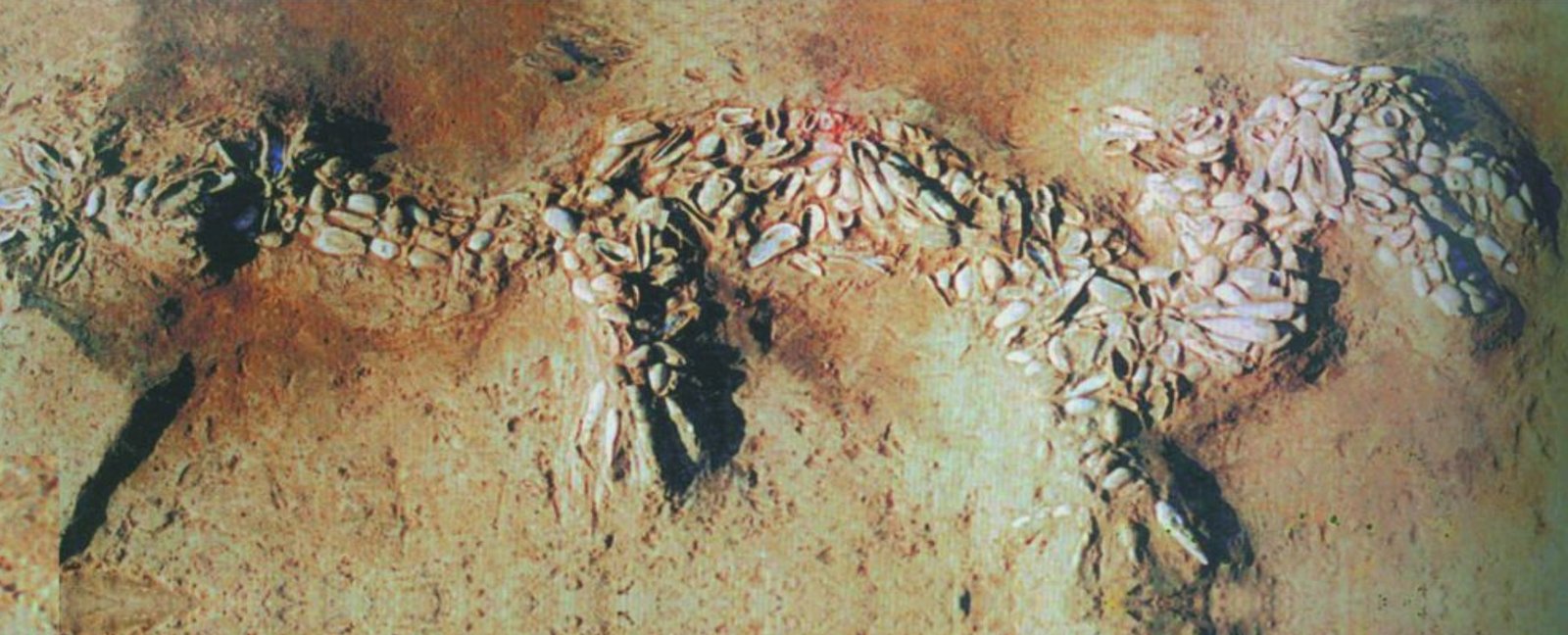
At Xishuipo in Puyang, Henan, a dragon-shaped arrangement of shells from the Yangshao culture is dated in the source to about 6,500 years ago. It is presented as an early, well-developed dragon image and is often celebrated with the title ‘China’s First Dragon.’
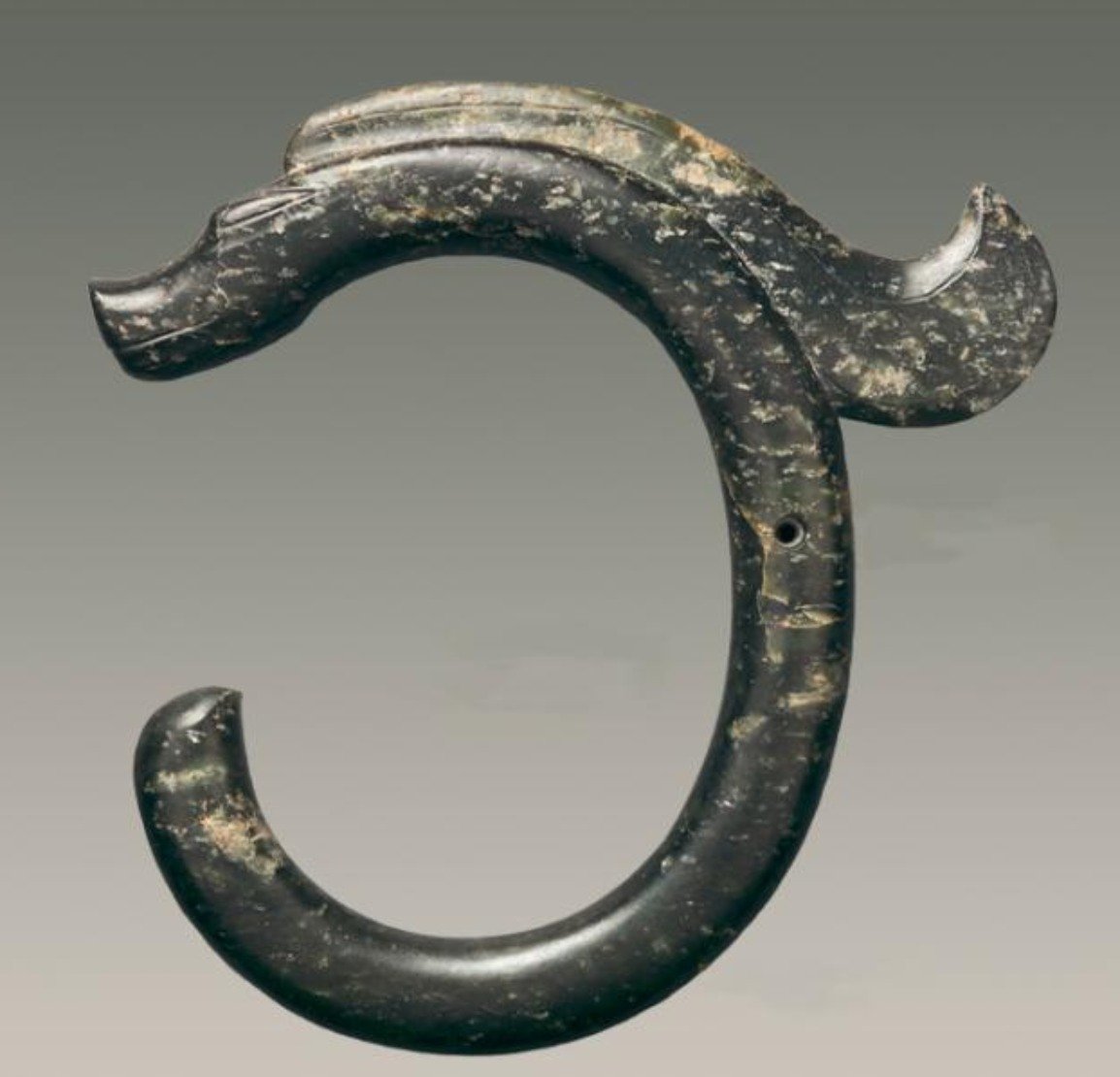
A C-shaped green jade dragon from the Hongshan culture in Inner Mongolia is dated in the source to about 5,000 years ago. Celebrated as ‘China’s First Jade Dragon,’ its curved outline is compared with the form of the dragon character in oracle-bone writing.
Why is the Dragon paired with Chén?
The source explains the Dragon’s place in the zodiac and its pairing with chén through the gradual interweaving of written characters, timekeeping, the Five Phases and yin–yang thought.
1. Morning mist and late spring
辰时 (chén shí) is the traditional two-hour period from 7 a.m. to 9 a.m. As morning light spreads, mist rises and clouds gather. In the traditional explanation, people imagined a dragon moving through the vapor and stirring moisture into the air. This made the morning interval the Dragon’s hour.
The chén month corresponds to the third lunar month, the closing month of spring. Rising yang energy, spring thunder and increasing rainfall suggest renewed growth. In folk belief, this is when dragons awaken, gather clouds and bring rain to the land. The source connects the season’s thunder with Shuowen Jiezi’s explanation of chén through zhèn, ‘to shake or thunder.’ Rising energy and moisture echo the image of a dragon ascending to the sky to release rain.
2. The character and its associations
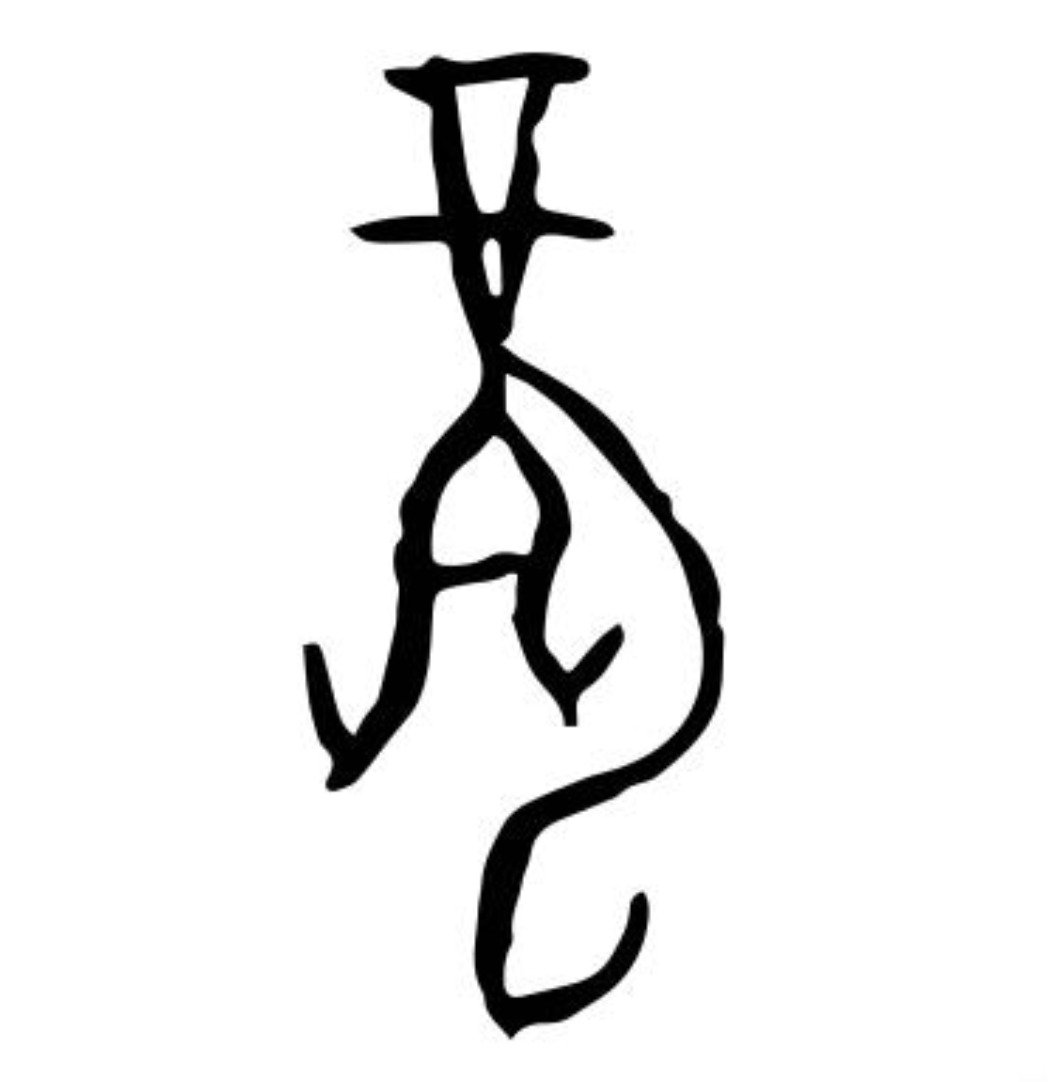
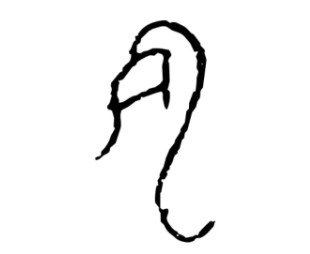
The oracle-bone character 辰 (chén) is not itself a pictograph of a dragon. The source instead draws connections between the ideas associated with the character and the powers attributed to dragons.
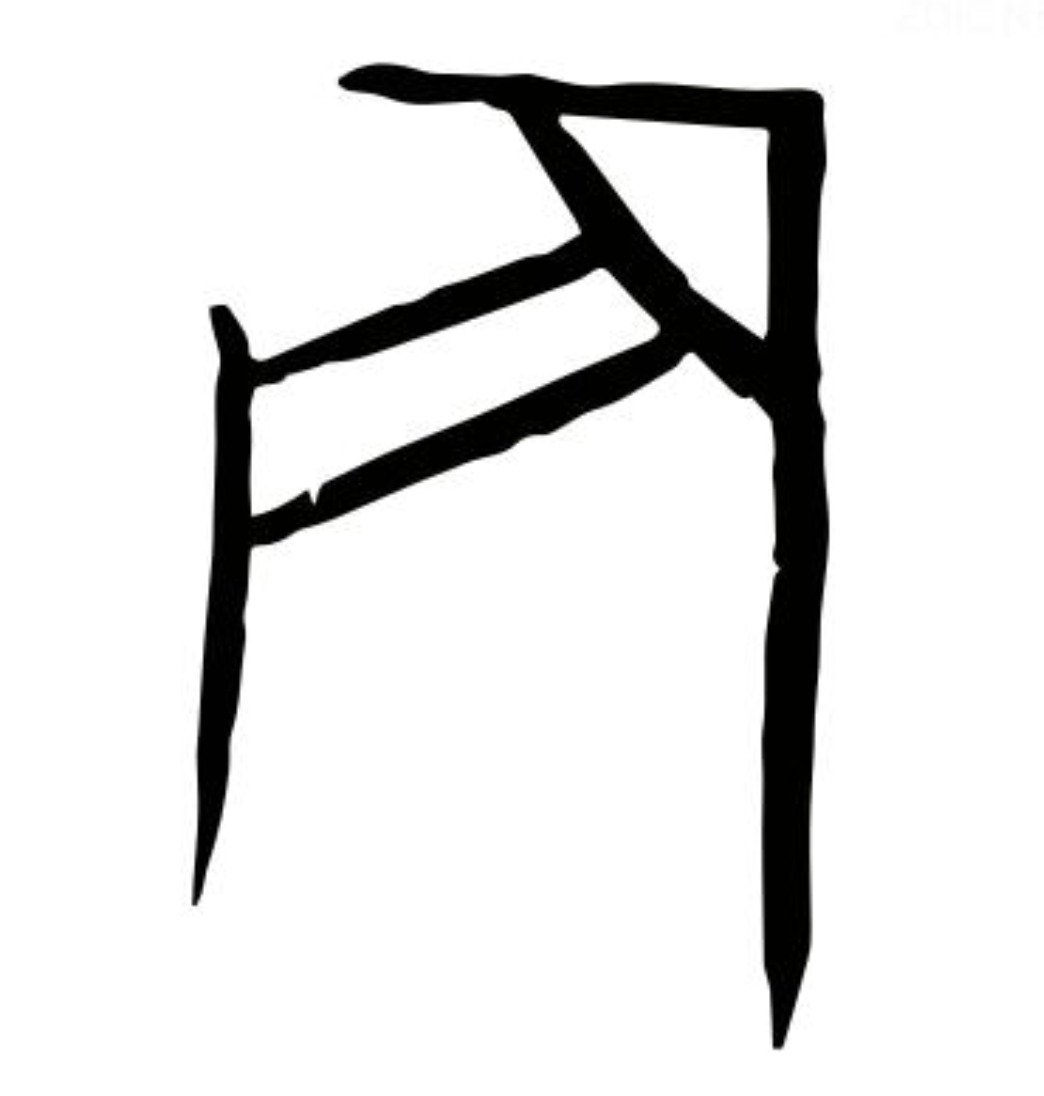
The early Chinese dictionary Shuowen Jiezi links chén with shaking, the third month, the movement of yang energy, thunder and lightning, and the season of agricultural work. In this reading, spring thunder and rising clouds suggest the moment when a dragon takes to the sky to gather clouds and bring rain.
Another interpretation cited in the source identifies the early chén character with a shèn clam. In traditional lore, shèn creatures and dragons both belong to the waters; a shèn was said to breathe out vapor that formed clouds. This provides a symbolic parallel with the dragon’s rainmaking role.
The source also connects the long, winding form of the oracle-bone dragon character with a large snake. In folk usage, a snake may be called a ‘little dragon.’ Chén is immediately followed by sì in the Earthly Branch sequence, just as the Dragon is followed by the Snake in the zodiac. The source interprets this succession as reinforcing a shared dragon-and-snake origin and the association of chén with the Dragon.
3. The Five Phases and the storage of water
Within 五行 (wǔ xíng), the Five Phases of traditional Chinese cosmology, chén, xū, chǒu and wèi are the four earth storehouses, each associated with the closing part of a season. Chén is classified as moist earth and as a storehouse of water.
Clouds and rain are central to the dragon’s mythical nature. It can lie hidden in deep waters or rise into the clouds, holding water and releasing rain. Chén’s role as a reservoir of moisture therefore corresponds symbolically with the dragon’s command of rainfall.
Earth can also hold water. Their combination evokes a dragon resting in the depths, supported by the land, before rising when wind and clouds create the right conditions.
4. Yang containing yin
Chén is fifth in the Earthly Branch sequence. Its odd number makes it a yang branch. The Dragon, imagined as a supreme sacred creature, is also classified as yang. Pairing a yang branch with a yang animal gives them a shared symbolic character.
Yet chén is also said to contain guǐ water, a yin quality. It thus combines aspects of 阴阳 (yīn yáng), the complementary principles of yin and yang. The dragon similarly rests in hidden depths, associated with yin, and soars into the open sky, associated with yang. Its alternation between stillness and dramatic action mirrors chén’s traditional description as ‘a yang form containing yin.’
What the Dragon symbolizes
The source presents the dragon as a foremost cultural emblem of Chinese civilization, carrying several overlapping meanings.
1. Rain and renewal. As a rain-bringing deity of agricultural life, the dragon was invoked against drought and flooding. Its clouds and rain nourish the world, making it a symbol of abundant harvests and vitality.
2. Authority and ambition. Dragon imagery has long been associated with emperors. The image of a fish leaping through the Dragon Gate expresses the hope of overcoming obstacles and rising to new heights through accumulated effort.
3. Shared cultural identity. The familiar idea of ‘descendants of the dragon’ represents a broad cultural community and ideals of openness, integration and continuing self-improvement.
4. Protection and good fortune. Traditional belief gives dragons the power to guard homes, repel evil and bring auspicious blessings. The ‘Evolution of Rites’ chapter of the Book of Rites names the 麒麟 (qí lín), an auspicious mythical creature, the phoenix, tortoise and dragon as the Four Numinous Creatures. Although the qílín is listed first, the source describes the dragon’s later prominence through its powers to appear or remain hidden and to command wind and rain, presenting it as the leading figure of the four in popular esteem.
5. Patience and adaptability. A dragon can wait in the depths until wind and clouds arrive. It symbolizes the ability to yield or advance, gather strength quietly and recognize the moment to pursue a great ambition.
Folk customs and beliefs
1. Festivals through the year
Dragon imagery as a water deity has inspired many long-established customs. On the second day of the second lunar month, 龙抬头 (lóng tái tóu), ‘the Dragon Raises Its Head,’ people traditionally have a haircut, eat foods given dragon-related names and perform rites inviting the dragon’s return, hoping for rain and a fortunate year. Dragon lantern dances at Lunar New Year and the Lantern Festival express wishes to dispel harm, welcome blessings and secure a harvest. The source also connects Dragon Boat Festival races with traditions of honoring dragon deities.
2. Auspicious designs
Three familiar designs express wishes for harmonious marriage, good fortune and progress beyond existing limitations.
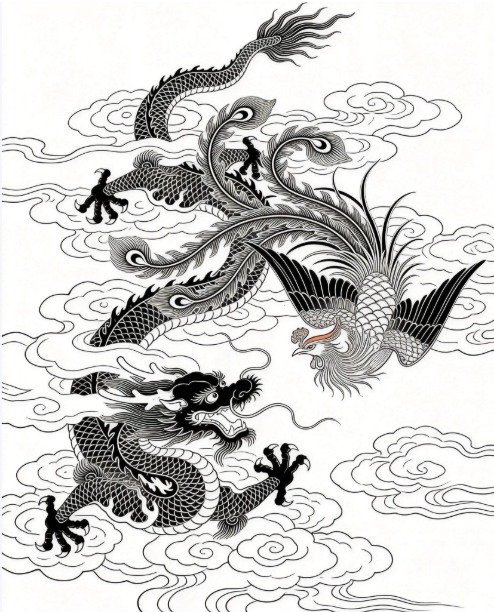
Dragon and phoenix bringing blessings: the two creatures together symbolize a happy marriage, prosperity and good fortune.
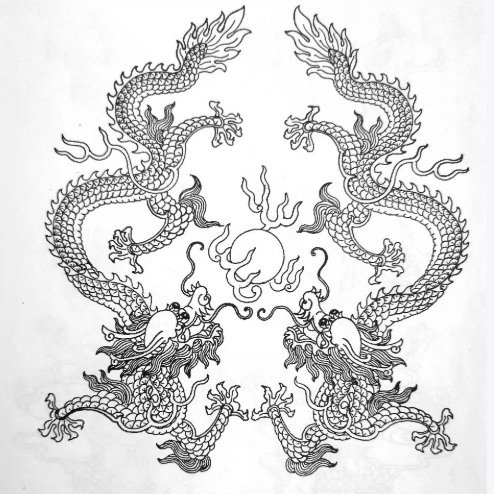
Two dragons playing with a pearl: a wish for peace, favorable circumstances and auspicious blessings.
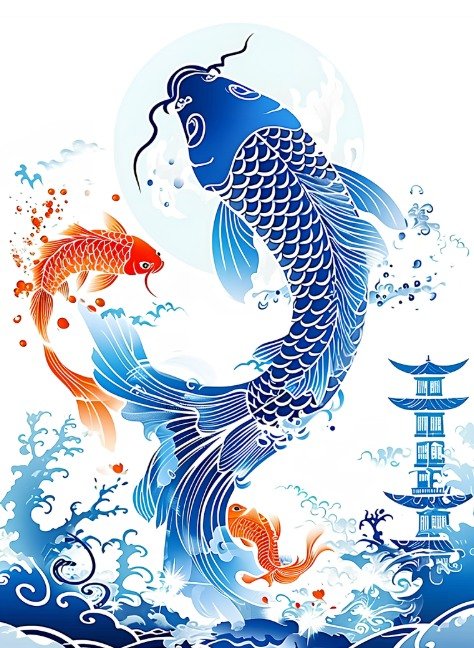
A fish leaping through the Dragon Gate: overcoming difficulties and advancing in study or a career.
3. Temples, landscapes and compatibility beliefs
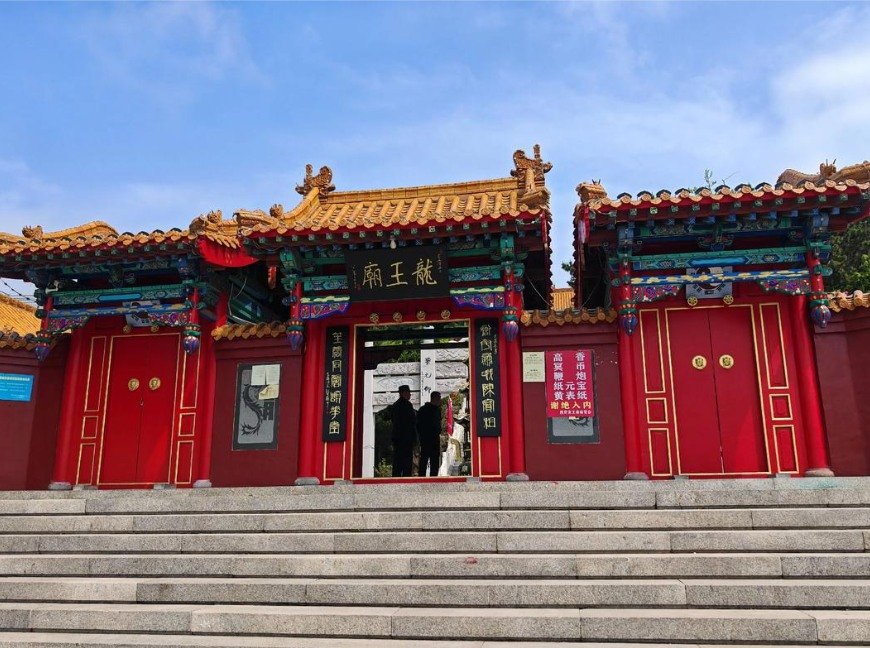
Dragon King temples were built in many places. During droughts, communities prayed to the dragon for rain, drawing on its traditional command of clouds and water.
In 风水 (fēng shuǐ), the traditional interpretation of landscapes and the arrangement of spaces, mountain ranges are described as 龙脉 (lóng mài), ‘dragon veins.’ Places where these veins converge are believed to concentrate vital energy.
Traditional zodiac compatibility systems describe the Chén Dragon as clashing with the Xū Dog and being in a harmful pairing with the Mǎo Rabbit. The Yǒu Rooster forms its 六合 (liù hé), a harmonizing pair, while the Zǐ Rat and Shēn Monkey join it in a 三合 (sān hé), a three-way harmony. These are folk interpretations sometimes used when considering friendship or marriage, rather than reliable measures of a relationship.
Idioms, proverbs and everyday wisdom
Each entry presents the original Chinese, its pronunciation in pinyin, an English rendering and an explanation of its meaning. These expressions explore vitality, ambition, hidden talent and the value of adapting to circumstances.
龙马精神
The spirit of the dragon-horse
Vigorous energy, high spirits and a strong will to move forward.
画龙点睛
Adding the eyes to a painted dragon
A decisive finishing touch that brings a whole work to life by addressing its essential point.
卧虎藏龙
Crouching tigers and hidden dragons
A place or group containing many people of exceptional but unrecognized ability.
龙争虎斗
A dragon and a tiger in fierce combat
An intense contest between powerful, well-matched opponents.
生龙活虎
A lively dragon and a spirited tiger
Full of energy, vitality and physical vigor.
叶公好龙
Lord Ye’s love of dragons
Professing to love something but fearing it when it actually appears: enthusiasm that is not sincere.
来龙去脉
The approaching dragon and its departing veins
The full background of a matter: its origins, development and chain of causes and effects.
攀龙附凤
Clinging to dragons and attaching oneself to phoenixes
Currying favor with powerful people for personal gain; usually a critical expression.
群龙无首
A group of dragons without a head
A group without a leader, leaving affairs scattered or disorganized.
龙盘虎踞
A coiling dragon and a crouching tiger
A grand, naturally defensible landscape, often describing an imperial capital or fortress.
乘龙快婿
A fine son-in-law riding a dragon
A complimentary expression for an excellent and much-appreciated son-in-law.
鱼龙混杂
Fish and dragons mixed together
Good and bad people, or genuine and inferior things, mixed so closely that they are hard to distinguish.
二月二,龙抬头
On the second day of the second month, the dragon raises its head
A seasonal saying linked with the rising Azure Dragon asterisms, spring thunder and the start of farming. The festival is associated with prayers for good fortune.
龙游浅水遭虾戏,虎落平阳被犬欺
A dragon in shallow water is mocked by shrimp; a tiger on the plains is bullied by dogs
Powerful people who lose their favorable circumstances may be mistreated by those who were once much weaker.
强龙不压地头蛇
Even a mighty dragon does not overpower the local snake
An outsider, however powerful, should take established local influence seriously.
龙生龙,凤生凤,老鼠生来会打洞
Dragons beget dragons, phoenixes beget phoenixes; rats are born knowing how to dig holes
A traditional saying expressing the belief that children’s qualities and habits are shaped by their parents.
大水冲了龙王庙,一家人不认一家人
A flood washes through the Dragon King’s temple; one family fails to recognize its own
People on the same side fall into conflict through misunderstanding.
云从龙,风从虎
Clouds follow the dragon; wind follows the tiger
Like things respond to one another. The arrival of an exceptional person may be accompanied by circumstances that answer their abilities.
龙无云不行,鱼无水不生
A dragon cannot travel without clouds; a fish cannot live without water
Everyone needs suitable conditions and support in order to act or succeed.
能大能小是条龙,只大不小是条虫
One that can be great or small is a dragon; one that can only be great is a worm
True ability includes flexibility and restraint. Always insisting on dominance, without knowing when to yield, makes success difficult.