The longest light.
Grain ripens, shadows shorten and a bowl of noodles welcomes the season. At the height of daylight, the year quietly begins to turn.
Begin exploring ↗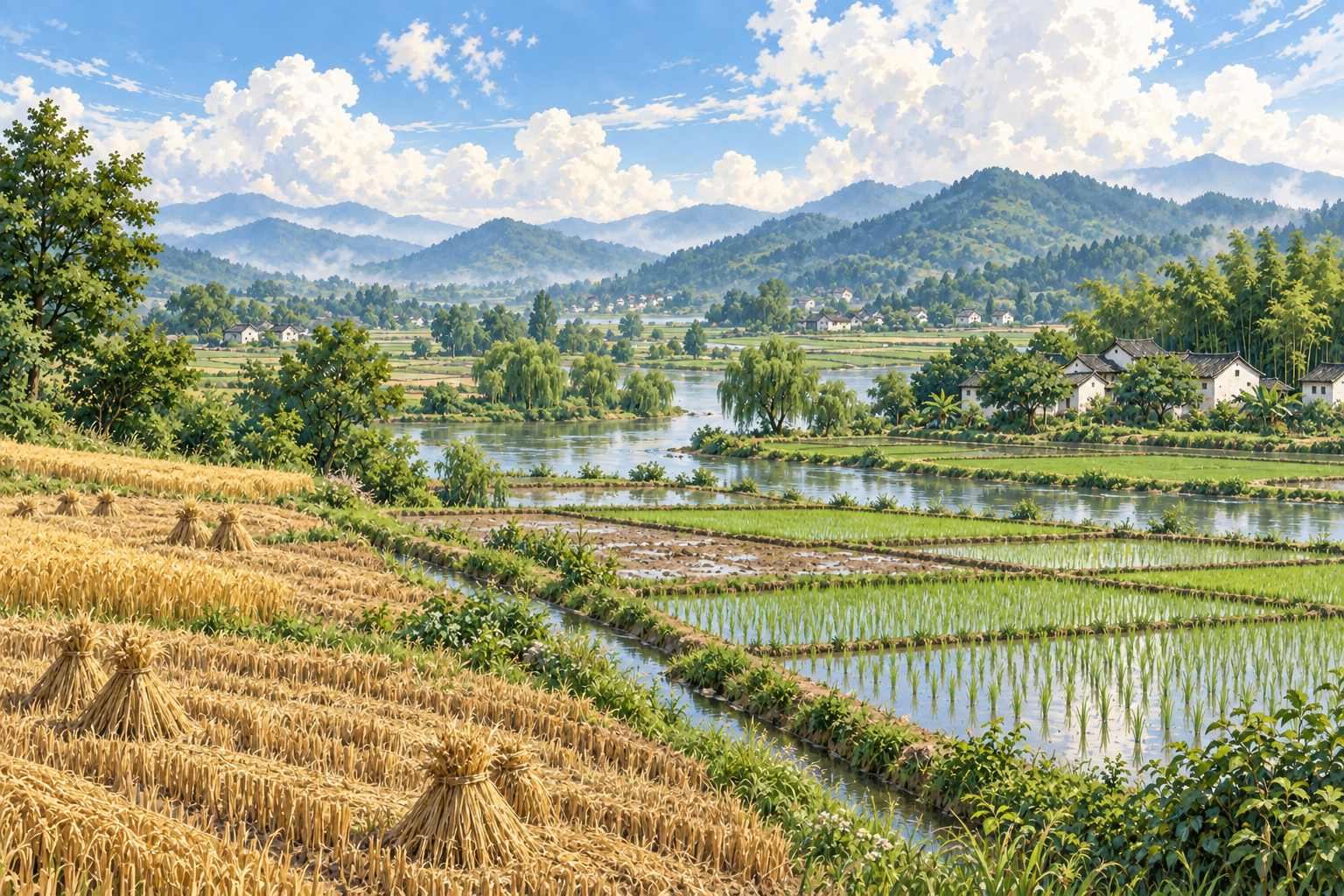
When the light reaches its height
Summer Solstice marks the Sun’s northernmost declination and the Northern Hemisphere’s longest day of the year. From this turning point, daylight gradually decreases. Noon shadows become especially short across much of China. The hottest weather often arrives later, as the land and oceans continue absorbing heat.
See Hong Kong Observatory’s explanation of the delay in summer heat.
The supplied article presents the two solstices as among the earliest seasonal markers recognized in China. Its account of 至 (zhì) begins with an arrow reaching the ground or a target: something has arrived at its endpoint. It also cites Shuowen Jiezi’s image of a bird descending to earth. These images explain the word’s associations with arrival, an extreme and a turning point.
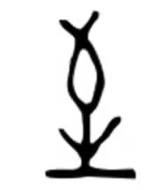
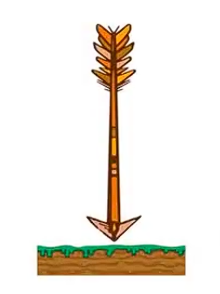
In traditional 阴阳 (yīn yáng) thought, full yang contains the beginning of yin. The article uses the solstice as a lesson in change: what reaches fullness does not remain at its peak forever. This cosmological image accompanies the observable shortening of daylight; it is not a measurement of a physical bodily energy.
One offering: earth and ancestors
The source describes the solstices as major ritual occasions. In its account of the Rites of Zhou, rulers honored heaven at Winter Solstice and earth at Summer Solstice, with the latter associated with 方泽 (fāng zé), the square marsh altar. It also recalls rural families offering newly harvested wheat and fresh melons to honor ancestors.
The underlying theme is gratitude: harvest belongs to a relationship between land, season, family and the people who came before. The ritual descriptions are historical and cultural accounts, rather than instructions for present-day observance.
Two foods: noodles and an egg
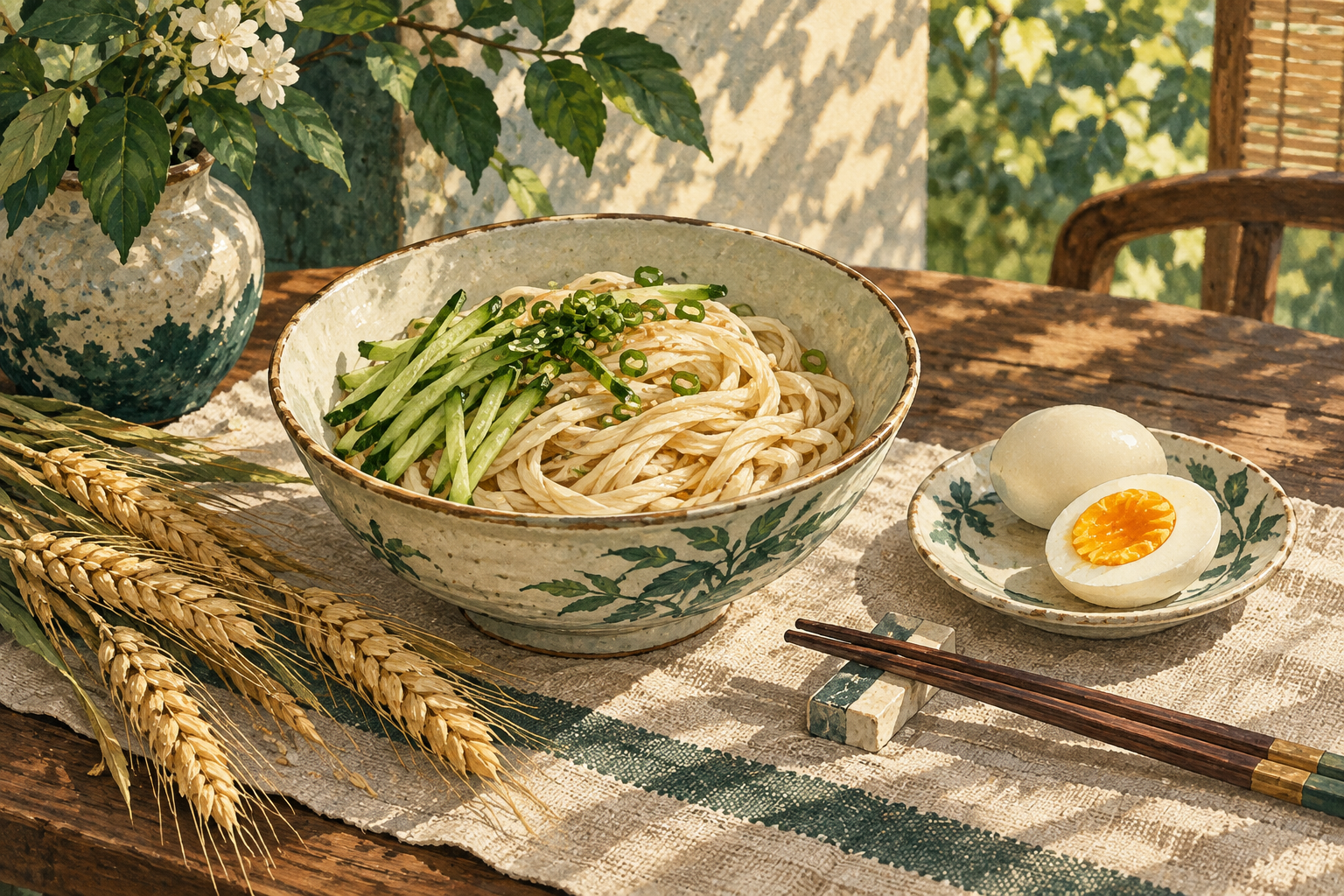
冬至饺子夏至面
Around the wheat harvest, freshly milled flour becomes the season’s first noodles. The source calls this 麦尝新 (mài cháng xīn), tasting the new wheat, first offered in gratitude to heaven, earth and ancestors. Long noodles on a long day suggest longevity and auspicious continuity.
The article describes noodles rinsed in water and served at a moderate temperature. It connects this with traditional ideas of caring for the 脾胃 (pí wèi), spleen and stomach in Chinese medical thought. This explains a food tradition; it is not a claim that one dish has a proven therapeutic effect.
夏至吃蛋,石板踩烂
The egg’s roundness symbolizes completeness. The source presents the saying as a family wish that children remain strong through summer. The promise is playful folk imagery, not a nutritional guarantee.
Three old cautions, one wish for balance
1. Avoid angry or hurtful speech
The source cites Huangdi Neijing’s counsel to avoid anger during summer. It portrays the solstice as a time of strong yang and fire, and uses the image of harsh words harming both speaker and listener. Its broader cultural lesson is calm, considerate conduct.
2. A traditional taboo on shaving the head
The article records a belief that hair provides an outlet for yang at the body’s surface, so shaving at the solstice could trap heat and bring heatstroke or a rash. This should be read as a historical folk explanation, not a reason to treat a haircut as a medical danger.
3. Keep a steady daily rhythm
The source cites Zunsheng Bajian on the first emergence of yin at Summer Solstice and the need to steady the mind and moderate desires. It describes avoiding late nights, excessive chilling and overeating as ways of living in step with the season. These are traditional lifestyle ideals rather than individualized health advice.
The article brings the three cautions together as caring for 心气 (xīn qì), the spirit of the heart; 阳气 (yáng qì), yang vitality; and 元气 (yuán qì), original vitality. Its closing image is care for heart, body and life—an expression of cultural values at a seasonal threshold.
Astronomical reference: Hong Kong Observatory — the 24 solar terms. Heritage record: UNESCO — Twenty-Four Solar Terms. Main text adapted from the supplied Chinese documents. Generated illustrations are interpretive artwork, not historical photographs.