Five
Four directions, and somewhere to stand. Five connects a center with its surroundings. Through the five phases, it became an influential language for describing change, relationship and ordered variety.
A crossed shape, a central idea
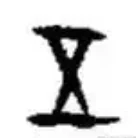
Early forms of 五 (wǔ) include crossed strokes. The later Shuowen Jiezi links the sign with the interaction of yin and yang. Its cosmological explanation is part of the history of interpretation; the graphic evidence alone does not establish that philosophy as the character’s original meaning.
Four directions plus a center make five a useful spatial pattern. In later numerical diagrams, five occupies the middle, giving the number a strong association with balance and coordination.
Five phases, not five chemical elements
五行 (wǔ xíng) names wood, fire, earth, metal and water. “Five phases” emphasizes patterns of activity and transformation. These categories became a framework linking seasons, directions, colors, tastes, sounds, political order and bodily processes.
The generating sequence runs wood → fire → earth → metal → water → wood. Another cycle describes checking or overcoming: wood → earth → water → fire → metal → wood. Such cycles organize a traditional model; they do not demonstrate universal physical laws.
Wood · 木 (mù)
East · spring · blue-green · sour · the musical note 角 (jué).
Fire · 火 (huǒ)
South · summer · red · bitter · 徵 (zhǐ).
Earth · 土 (tǔ)
Center · yellow · sweet · 宫 (gōng). Its seasonal position varies, including late summer or transitions.
Metal · 金 (jīn)
West · autumn · white · pungent · 商 (shāng).
Water · 水 (shuǐ)
North · winter · black or dark tones · salty · 羽 (yǔ).
Five ways to organize a society
Moral and social classifications give five another kind of center. The 五常 (wǔ cháng) are humaneness, rightness, ritual propriety, wisdom and trustworthiness. The 五伦 (wǔ lún) concern ruler and subject, parent and child, husband and wife, older and younger siblings, and friends; their historical interpretations include unequal relationships.
Ritual writers distinguished five broad kinds of rites: auspicious, mourning, military, guest and celebratory rites. The “five punishments” changed across periods, so a single list cannot describe the entire imperial legal tradition.
Five blessings
五福 (wǔ fú), in the Hongfan tradition: longevity, wealth, health and peace, love of virtue, and a fulfilled or peaceful end to life.
Five grains
五谷 (wǔ gǔ) represents staple crops. Lists vary by text and region; rice is not included in every ancient list.
Five sacred peaks
五岳 (wǔ yuè): Tai in the east, Hua in the west, Heng in the south, Heng in the north and Song at the center. The two Heng mountains use different Chinese characters, 衡 and 恒.
Five legendary emperors
五帝 (wǔ dì) often names the Yellow Emperor, Zhuanxu, Di Ku, Yao and Shun. Other systems supply different lists.
The center of a numerical map
The Changes tradition assigns odd numbers to heaven and even numbers to earth: one, three, five, seven and nine against two, four, six, eight and ten. Later Hetu explanations pair the generating numbers one to five with completing numbers six to ten.
The arrangement encourages readers to see correspondences around a center. Five can also be expressed as two plus three, but that arithmetical fact does not prove a metaphysical theory. The cultural interest lies in how interpreters used a simple relation to discuss order.
In everyday speech, 五光十色 (wǔ guāng shí sè) means dazzling variety, while 五花八门 (wǔ huā bā mén) means a great assortment. Neither expression asks the listener to count exactly five things.
Numbers in everyday words.
Open a group to read the Chinese, its pronunciation and the English meaning together. This collection includes idioms, sayings and popular phrases. Pinyin uses dictionary tones; natural speech may change the tone of 一 and 不.
Expressions 01–10
五大三粗
Large, sturdy and powerfully built; sometimes unflattering.
五湖四海
Five lakes and four seas: people or places from far and wide.
五颜六色
A rich variety of colors.
五脊六兽
Restless, uncomfortable or at a loss; a colloquial expression whose image recalls roof ornaments.
五劳七伤
Many kinds of strain and injury, in traditional medical language; figuratively, poor health after repeated hardships.
五风十雨
Wind every five days and rain every ten: an ideal of timely, favorable weather, not a forecast.
五彩缤纷
Brilliantly multicolored.
五谷丰登
An abundant grain harvest; a wish for plenty.
五马分尸
Dismemberment by pulling with horses: a reference to a brutal historical form of punishment.
五短身材
A short, compact build.
Expressions 11–20
五音不全
Unable to sing accurately in tune; not literally missing one of five notes.
五陵年少
Young men of wealth and privilege, evoking the aristocratic districts near Han imperial mausoleums.
五内俱焚
As if the internal organs were burning: overwhelming grief or anxiety.
五毒俱全
Full of every kind of vice; the “five poisons” have different lists in different contexts.
五味俱全
All five flavors present; also a mix of many emotions.
五子登科
Five sons succeeding in the examinations: a traditional image of family educational success.
五花大绑
To bind someone tightly with a cord arrangement restricting the arms and body.
五十步笑百步
A soldier who fled fifty paces mocks one who fled a hundred: criticizing another for a fault one shares.
一五一十
In full detail, leaving nothing out; literally counting in fives and tens.
二一添作五
To divide equally between two parties; a phrase inherited from calculation with an abacus.
Expressions 21–30
三令五申
Repeated commands and emphatic instructions.
三五成群
In small groups of three or five.
三番五次
Again and again; repeatedly.
三年五载
Several years; a fairly long time.
三纲五常
The three bonds and five constants: influential categories of traditional Confucian social ethics.
四分五裂
Split into many pieces; fragmented or disunited.
隔三差五
At short intervals; every so often.
学富五车
Learning enough to fill five carts of books: exceptionally well read.
过五关斩六将
To pass five barriers and overcome six generals: surmount repeated difficulties, from Guan Yu’s fictionalized adventures.
不为五斗米折腰
Not bowing for five pecks of rice: refusing to surrender one’s dignity for a modest salary, associated with Tao Yuanming.
Expressions 31–31
麻雀虽小,五脏俱全
A sparrow is small but has all its organs: something compact can still be fully equipped.
Reading note: the English text adapts and reorganizes the supplied Chinese document. Character diagrams and illustrations are reproduced from that source; they are not presented as authenticated archaeological objects. Numerical diagrams are modern explanatory designs.